


 |
 |
 |
 |
|
 |
 |
About PET/CT
The combination PET/CT scanner is a major advance in imaging technology and patient
care.
As the name implies, it combines two scanners ¡V thePositron Emission Tomography
(PET), which shows metabolism and the function of cells, and the Computed
Tomography (CT), which shows detailed anatomy ¡V
into one.
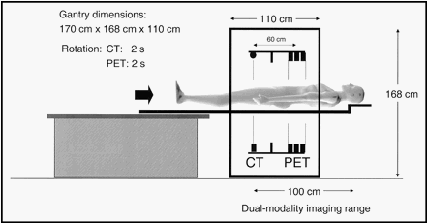
Figure 3: Schematic diagram of a CT/PET scanner.
The result is that doctors are now able to get highly defined, 3-D images inside the
human body in one system. This provides important information about a patient¡¦s
condition, and allows doctors to make the best choices about treatment of conditions such
as cancer and heart disease.
For example, the PET scanner can provide critical information about the metabolic
function of cancer cells, and can detect very small tumors, but not the exact location.
The CT scanner, however, can provide anatomic information. So the combination
PET/CT scanner gives doctors a powerful new system for detecting and diagnosing
conditions like cancer earlier and more accurately, increasing the patient¡¦s chances of a
good outcome.
Another patient benefit of the PET/CT scanner is its open design. This reduces the
chances that patients will feel claustrophobic, a complaint many patients have had with
scanners that have long tunnels. The PET/CT scanner features two large rings with an
open area in between, giving patients the ability to see the area around them and allowing
technicians better patient access during the exam.